REVIEW · PARIS
Bateaux Mouches Sightseeing Cruise on the Seine River in Paris
Book on Viator →Operated by Compagnie des Bateaux-Mouches · Bookable on Viator
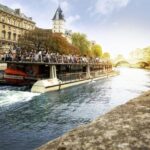
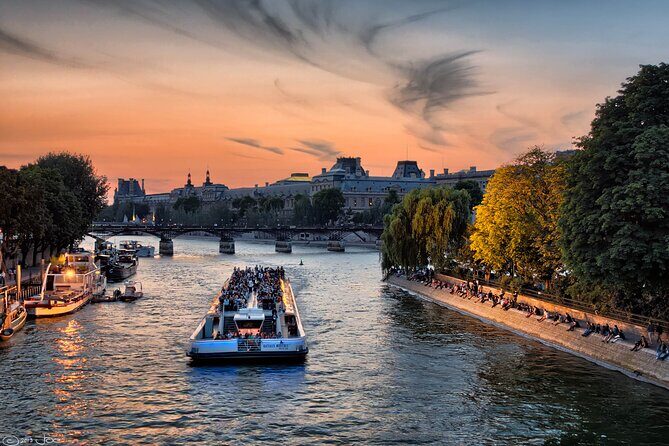
Paris looks different from the Seine. This cruise gives you big landmark views without fighting walking crowds on the streets. You’ll glide past Notre-Dame, the Louvre, and the Eiffel Tower in about 70 minutes, with commentary offered in English. The catch is sound: on the lower deck, it can be hard to hear over noise when it’s busy.
What I like most is the flexibility. Departures run from 10am to 9pm, and you don’t have to lock into one fixed time slot to board. You get two decks, roof top for photos and inside for shelter, plus a free restroom on board—useful when you’re doing a full day of sightseeing. Dress for the water breeze, especially at night.
At about $20.40 per person, the value is strong for a quick overview, but snacks and drinks cost extra and there’s no WiFi. Also plan for lines at peak times, including the voucher-to-ticket exchange if you booked through a third party.
In This Review
- Key things to know before you go
- Two decks and flexible departures: when to ride the Seine
- Port de la Conférence: ticket exchange, lines, and smooth boarding
- A royal square with a guillotine past and a gift from Egypt
- The Louvre’s glass pyramid and the museum that replaced a fortress
- Hôtel de Ville and the Conciergerie: Paris City Hall and a Revolutionary prison
- The Parisii to Notre-Dame: where the city began and the cathedral you can still read
- Île Saint-Louis and Pont Neuf: Le Vau’s houses and Henri IV’s Vert Galant
- Musée d’Orsay and Les Invalides: Impressionists and Napoleon’s tomb
- Eiffel Tower engineering and the best way to catch the night lights
- Comfort, audio, and value at about $20.40
- Should you book Bateaux Mouches? Quick decision guide
- FAQ
- Are there toilets on board the boats?
- Do you stop during the cruise to get off and explore?
- Do I need to book a specific time slot?
- Is seating assigned when I board?
- Can I buy snacks or drinks on board?
- Where do I meet for the cruise?
- Can I cancel for a full refund?
Key things to know before you go
- Two decks let you choose between fresh air and a calmer, sheltered ride
- Frequent departures from 10am to 9pm help you fit the cruise into your day
- No intermediate stops means a steady flow for seeing highlights from the river
- Landmark sequence covers Notre-Dame, the Louvre, Hôtel de Ville, and Eiffel Tower
- Audio can be tricky on some parts of the boat when crowds get loud
- Cold weather tip: the roof deck can feel sharp even when the city feels mild
Two decks and flexible departures: when to ride the Seine
The Bateaux Mouches format is simple: a 70-minute cruise through the city’s core, with departures running all day and evening. You can board on a day and time of your choosing (within the daily operating window), and you’ll see a lot without spending the morning and afternoon constantly repositioning on foot and metro.
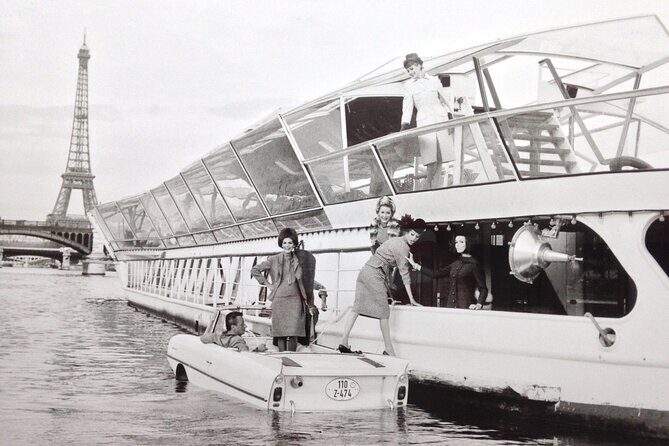
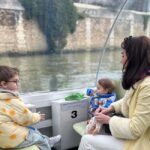
Two decks make it easy to adapt to weather. If you want skyline photos, the roof top is where you’ll lean. If wind, rain, or cold is an issue, choose the inside deck where you’re more protected. The boat also has a restroom on board, so you’re not hunting for facilities mid-sightseeing.
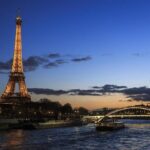
If you’re planning around sunset, you’re in good shape. A number of people time their cruise for the evening light, and it’s the classic way to catch the Eiffel Tower lighting moment. Just remember: evening crowds often mean more waiting before you finally step onto the boat.
Other sightseeing cruises we've reviewed on the Seine & in Paris
Port de la Conférence: ticket exchange, lines, and smooth boarding
Your meeting point is Port de la Conférence (75008 Paris), near the Pont de l’Alma area. It’s also described as being close to public transportation, which is handy because you’re not forced to organize a complicated transfer.
One practical detail: if you bought your ticket through a voucher system, plan time for voucher exchange at the ticket desk. People have reported needing to swap vouchers into proper tickets before boarding. On busy days, that step can turn a quick process into a longer one, so arrive with a cushion.
Lines can build, especially around popular departure times and during holidays. If you want a stress-free boarding experience, don’t show up at the last second. Get there early enough to stand, wait your turn, and still board without feeling rushed. Once you’re on the boat, the pace is easy and you can focus on the view.
A royal square with a guillotine past and a gift from Egypt
As you start, you’re facing a famous royal square setting—built in the 18th century under architect Gabriel’s design. In 1792, that same area was associated with the guillotine and the grim period that followed. Later, in 1836, Louis Philippe installed an obelisk there as a gift from Egypt.
From the boat, what matters is scale and contrast. On foot, this kind of place can feel like just another square. From the river, it’s part of a wider visual story, showing how Paris layers different eras side by side. Look for the way the obelisk and surrounding buildings line up with the river angle—your best photos are usually when you’re seated early and can adjust your position before the boat fully moves past.
A small consideration: river cruises are a moving viewpoint. If you’re a super-fast photographer, you’ll want to be ready when you approach this section. There’s no chance to hop out and reset your angle mid-cruise.
The Louvre’s glass pyramid and the museum that replaced a fortress
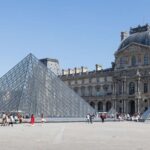
Next up is the Louvre, introduced here through a key transformation. It began as a stronghold in the 13th century, became a royal residence, and was turned into a museum in 1793. The museum’s collection is enormous—over 35,000 works—so you’re mostly seeing the exterior and the famous river-facing presence, not the inside galleries.
Since 1989, visitors enter through the glass pyramid designed by architect Ieoh Ming Pei. From the Seine, you get a quick “aha” moment: the Louvre feels both like a palace and like a modern gateway. That mix is exactly why this stop works on a cruise. You get the big-picture understanding fast, without committing to a museum ticket and hours inside.
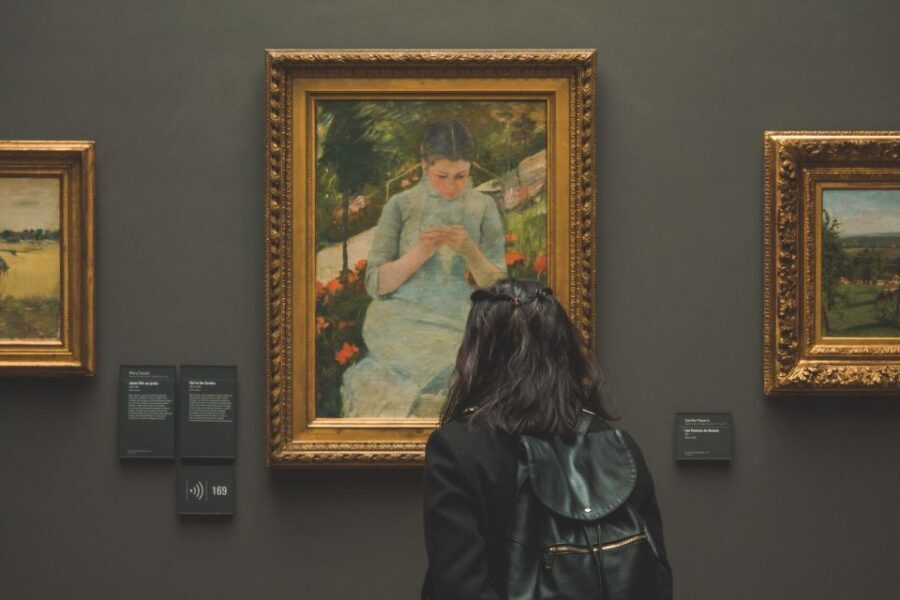
The drawback for art lovers: you won’t see Mona Lisa and Venus de Milo from the boat. The charm here is seeing the Louvre as a visual anchor along the river. If you love museums, plan to pair this cruise with a later visit so you can switch from overview to details.
Hôtel de Ville and the Conciergerie: Paris City Hall and a Revolutionary prison
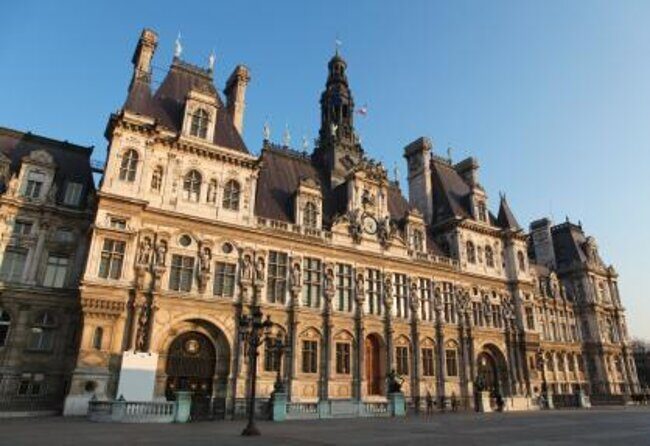
As the boat continues, you pass the Hôtel de Ville. This building is described as neo-renaissance style and rebuilt in the 19th century after being burnt during the Commune rule of 1871. Today, it serves as Paris City Hall.
A short distance down the timeline comes the Conciergerie, the part of the palace of the early French kings that remains. During the French Revolution, it became a prison. Seeing City Hall alongside a prison remnant is a powerful reminder that political power can shift quickly, and buildings often outlast the people who run them.
From the river, these stops are ideal for people who want context without a guided walking tour. You get quick, story-based highlights while staying seated or strolling along the deck. The only limitation is that if you’re hoping for long looks, the boat doesn’t slow down for extended photo sessions.
Other bateaux mouches cruises we've reviewed on the Seine & in Paris
The Parisii to Notre-Dame: where the city began and the cathedral you can still read
Before the big medieval icons, the cruise highlights the “cradle” of Paris. The earliest inhabitants, the Parisii, settled here in the 3rd century BC. This kind of framing is useful because it prevents you from treating Paris as only a collection of famous buildings.
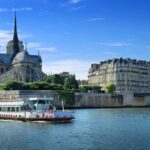
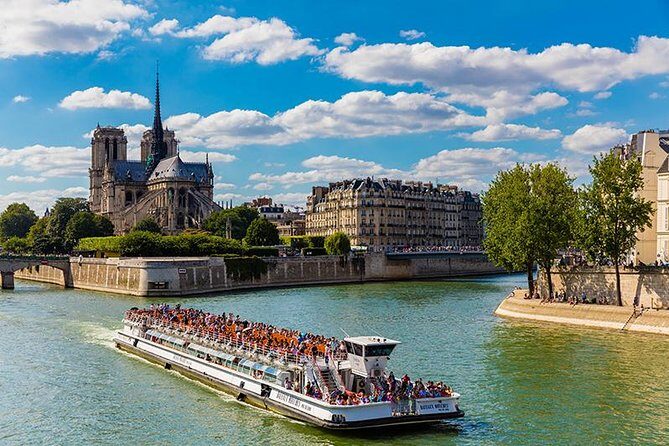
Then comes Notre-Dame. Construction began in 1163 and stretched until 1350. Victor Hugo celebrated it in The Hunchback of Notre-Dame, and the restoration was carried out in the 19th century by architect Viollet-Le-Duc. Even if you’re not a medieval architecture expert, these facts help you “decode” the cathedral’s importance.
A practical angle: Notre-Dame photographs well from the river, but lighting changes quickly throughout the day. If you ride in the evening, the contrast between stone, sky, and river reflections can make the cathedral feel more dramatic. If you ride in daylight, you’ll get clearer views of façade details, even though the river reflections are less dramatic.
Also keep this in mind for your comfort: if crowds get loud, it can be tougher to follow the narration at the moment you’re most focused on pictures. If you care about the commentary, staying inside can make it easier to catch what’s being said.
Île Saint-Louis and Pont Neuf: Le Vau’s houses and Henri IV’s Vert Galant
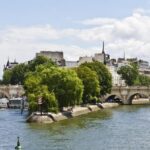
The itinerary then passes the Île Saint-Louis area, formerly called île aux vaches (cow’s island). Here you’ll find especially beautiful 16th and 17th century houses, largely associated with architect Le Vau.
This is one of those stretches where the river view feels more intimate than monumental. Instead of one landmark pulling all attention, you see a pocket of Parisian architecture that looks lived-in and human-scaled. It’s a great moment to pause your photography sprint and just enjoy the streetscape feel.
Next comes Pont Neuf, described as the oldest stone bridge in Paris, opened in 1606. At the center is the equestrian statue of King Henri IV, nicknamed Vert Galant (The Green Gallant) because of his many female conquests.
The bridge is also a handy visual reference point. It helps you orient yourself along the river if you plan to continue sightseeing on foot later. The scenery around Pont Neuf is a mix of historic structure and moving city energy, all from a perspective you can’t get from sidewalks.
Musée d’Orsay and Les Invalides: Impressionists and Napoleon’s tomb
The cruise then shifts toward 19th-century landmarks. You pass the area of the Musée d’Orsay, built in 1900 with a façade that hints at its earlier life as a railway station. Today it’s a museum focused on 19th-century art, especially the Impressionists.
On a boat, you don’t need to know every artist to appreciate the setting. The old-station-to-museum transformation is exactly the sort of Paris adaptation that makes the river route so satisfying. It’s the city reinventing its infrastructure without erasing what came before.
Then Les Invalides appears. The dome is adorned in fine gold. It began as a hospital for war wounded under Louis XIV, and today it houses the tomb of Napoleon I and the Musée de l’Armée (Military Museum). It’s another “big statement” building along the river—serious, monumental, and unmistakable when you pass.
If you’re the type who likes museums but dislikes long lines, this cruise helps you decide what to pursue next. You’ll get a visual match for your interests: Impressionists for Musée d’Orsay fans, military and Napoleon for Les Invalides devotees.
Eiffel Tower engineering and the best way to catch the night lights
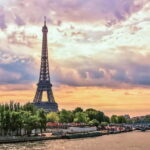
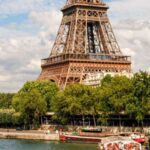
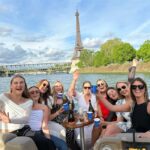
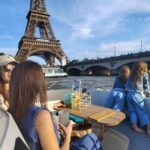
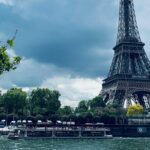
Finally, you reach the Eiffel Tower. It was designed by engineer Gustave Eiffel for the 1889 World Exhibition. The tower is described as 324 meters high and weighing about 10,000 tonnes. It’s hard to overstate what that means in real life, but the Seine makes it easier: you see the scale compared to bridges, rooftops, and riverbanks.
This is where choosing your deck matters. People who want maximum photos usually head to the roof top, but that’s also where cold and wind hit hardest. If you’re riding in winter or right after sunset, bring real layers. The water breeze can feel sharper than you expect.
If your timing is right, the viewing window around the tower can line up with the evening lighting moment. One useful tip: plan to be settled before you reach that final stretch, because once you’re focused on the tower, you’ll want both hands free for photos and nothing to interrupt your view.
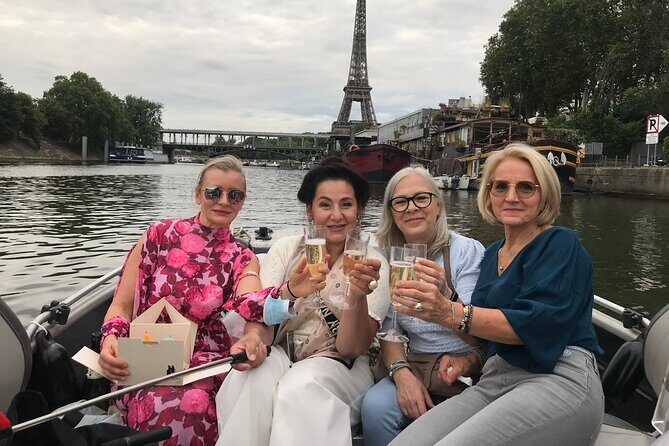
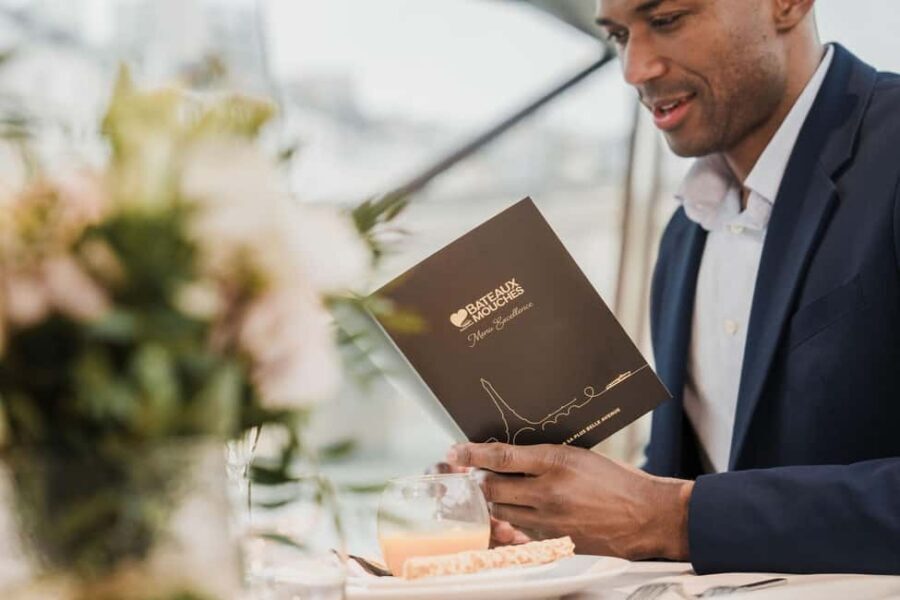
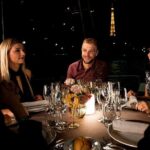
Also note: food and drinks aren’t part of some full service meal experience. Snacks and soft drinks, plus tea or coffee, are available for purchase. If you want something like champagne, you should assume it’s not part of the standard cruise setup described here.
Comfort, audio, and value at about $20.40
At $20.40 per person, this cruise is priced like a straightforward “see the highlights in one go” Paris activity. What makes it good value is the time efficiency. In about 70 minutes, you get an overview that would take far longer by foot, and you avoid traffic and the constant stops of navigating the city.
Comfort is generally practical. You can use a restroom on board, and seating is open—there’s no requirement to reserve a specific seat. The boat is also described as easy to access for people with reduced mobility and for parents pushing strollers.
Two comfort notes based on common experiences: first, the roof deck can be cold, especially in the evening. Second, rain can mean wet seating on outside areas. Bring a hat or waterproof layer if the weather is questionable.
Now, audio. The tour is offered in English, and narration is delivered electronically/recorded. The catch is that sound carry changes with location. Some people find the commentary hard to hear, particularly on the lower deck when the boat is crowded and kids are active. If hearing the narration is a priority, leaning toward the inside deck can help.
If you’re traveling with small pets, they’re only allowed if kept in a suitable bag, with larger restrictions beyond that. Service animals are allowed. That’s worth checking early so you don’t arrive stressed.
Food is mostly a “grab if you want” setup. Snacks and soft drinks plus tea or coffee are available for purchase, but extras like soda and hot drinks are not included. Plan accordingly if you’re expecting them to be part of the ticket.
Should you book Bateaux Mouches? Quick decision guide
Book it if you want the fastest way to get oriented around Paris’s top sights from the water. It’s especially smart for a first-time trip, for families who don’t want a long walking day, and for anyone who prefers photos and short stops over hours in lines.
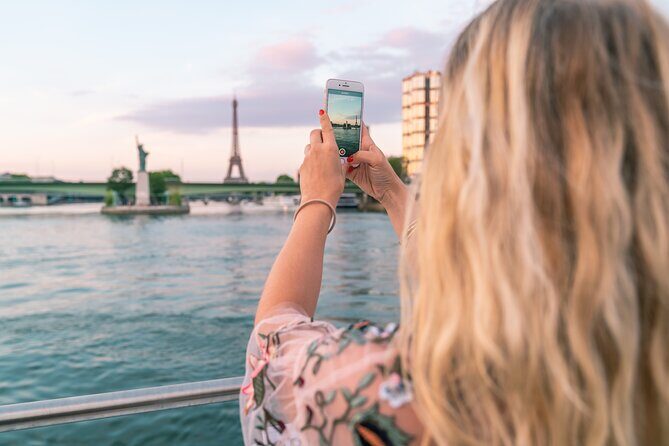
Skip it or adjust expectations if your goal is a longer river journey beyond the central sights. The cruise route is described as staying in the historical heart of Paris, and if you’re hunting for far-off landmarks like the Statue of Liberty, you may come away wishing you’d gone farther. Also, if you’re very sensitive to crowd noise or you rely on narration, choose your deck thoughtfully and arrive early to reduce stress.
If you’re flexible on timing, treat this as an evening anchor. The Eiffel Tower lighting moment is a great payoff for the ride length, and you can then continue by foot the next day with a clearer sense of where everything sits along the river.
FAQ
Are there toilets on board the boats?
Yes. Free toilets are available on board.
Do you stop during the cruise to get off and explore?
No. The sightseeing cruises start and return to the same point near the Pont de l’Alma, with no intermediate stops.
Do I need to book a specific time slot?
No fixed time slot is required. Your ticket is valid for two years from the date of purchase, and you can use it once on the date and at the time of your choice.
Is seating assigned when I board?
No. Seating is free on board, and you do not select a specific seat in advance.
Can I buy snacks or drinks on board?
Snacks are available at extra cost. There’s also a fast-food outlet on the quay before boarding. Soda and tea/coffee are available for extra cost as well.
Where do I meet for the cruise?
The cruise starts at Port de la Conférence, 75008 Paris, and ends back at the same meeting point.
Can I cancel for a full refund?
Yes. You can cancel for a full refund up to 24 hours before the experience’s start time. If you cancel less than 24 hours before, the amount you paid is not refunded.