REVIEW · PARIS
Paris World Fairs Walking Tour Top Sights Along the Seine River
Book on Viator →Operated by Paris TRIP · Bookable on Viator
World fairs still shape Paris.
This walk is a smart way to see the city through how it changed, not just what it looks like. I love the small group format because it keeps things relaxed and question-friendly, and I love the local guide who connects monuments to the big ideas behind them.
You’ll get a clear storyline from transport and architecture to art and politics, and it hits the Seine corridor with plenty of photo angles. One thing to consider: it’s about 2 hours of walking with a moderate pace, so if you’re prone to sore feet, pack comfort over style.
In This Review
- Key highlights that make this tour worth it
- How Paris World Fairs still power the city’s look
- Starting at Pl. Clemenceau: where modern transport meets big ambition
- Grand Palais and Petit Palais: showrooms for Paris’s art and engineering
- Pont Alexandre III: ornament, power, and photo-friendly design
- The Seine as the main event: how the river shaped the fairs
- Pont de l’Alma and the Liberty flame: fair legacies turned symbols
- Passerelle Debilly: a long footbridge with a fair-era footprint
- Palais de Tokyo and Palais de Chaillot: art on a world-fair timeline
- Trocadéro fountain and Pont d’Iéna: the Eiffel Tower’s entrance road
- What you’re really paying for with this $43.26 tour
- Who should book this, and who might skip it
- Should you book the Paris World Fairs Seine walk?
- FAQ
- How long is the Paris World Fairs walking tour?
- Where does the tour start and end?
- Is the tour offered in English?
- Is there an entry fee for the stops?
- How large is the group?
- What fitness level do I need?
- FAQ
- What is the cancellation policy?
Key highlights that make this tour worth it
- World-Fair connections: Paris landmarks tied to major Expositions Universelles and the technologies they showcased
- A guide like Olivia: multiple guides in the reviews (including Olivia) were praised for being clear, funny, and passionate
- Seine photo stops: ornate bridges and viewpoints built for crowds, now perfect for photos
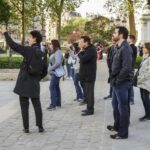
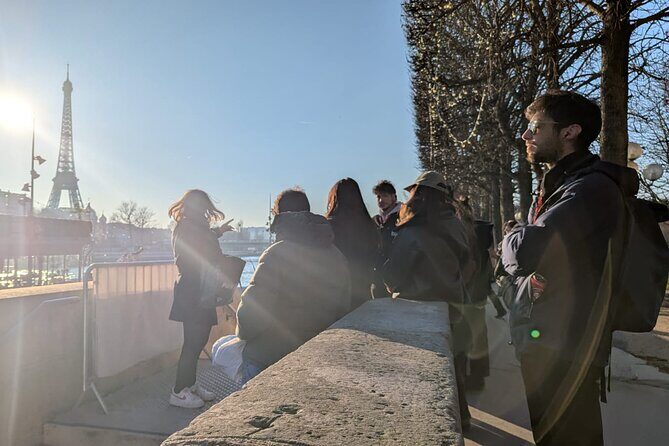
- Small group (max 15): easy to keep up, ask questions, and hear the details without shouting
- Mostly outside sights: you spend time walking and looking, not sitting in lines
- A fresh lens on familiar places: even people who live in Paris say the route changes how they see their own neighborhoods
How Paris World Fairs still power the city’s look
If you’ve ever walked through Paris and thought, Someone planned this, you’re not wrong. In the late 1800s and early 1900s, Paris hosted world-class exhibitions that pushed engineering, design, and political branding. The Seine became the stage.
On this tour, you follow that thread from one landmark to the next. The point isn’t to recite dates. It’s to understand why Paris developed the way it did: broad visitor routes, iconic structures, and the kind of showmanship that made crowds show up year after year. When you connect the dots, the city feels more intentional.
The best part is how the guide translates the theme into street-level details. You learn what to notice as you walk: why a bridge looks ornate, why a museum building matters, why a tower that was once criticized became a symbol of modern France. And because the group is capped at 15, your questions don’t get lost in the shuffle.
Other walking tours along the seine we've reviewed on the Seine & in Paris

Starting at Pl. Clemenceau: where modern transport meets big ambition
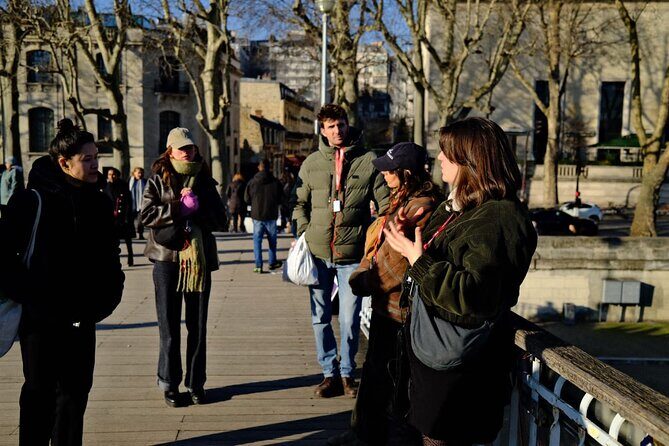
The walk starts at the Statue du Général Charles de Gaulle on Pl. Clemenceau in the 8th arrondissement, then you move toward the Champs-Élysées – Clemenceau metro station (Line 1).
This stop sets the tone: Paris didn’t just build monuments for the camera. It also built systems to move people. That Line 1 station opened for the 1900 Paris Exposition Universelle, and the tour uses it as a reminder that world fairs were about more than spectacle. They were also about modern transport and how quickly a city could handle crowds.
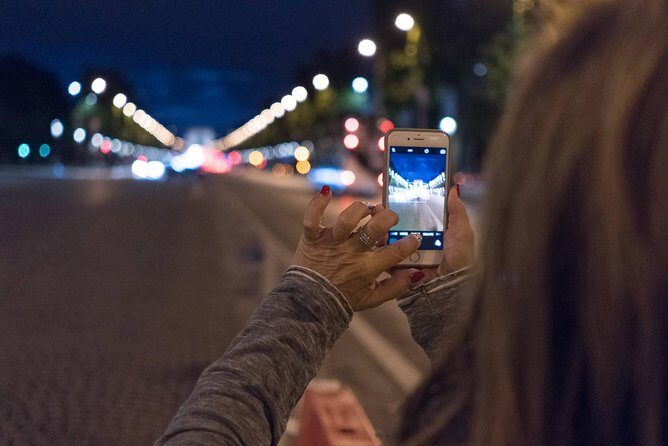
Practical tip: the early part of the walk is where you’ll want your phone charged and your shoes ready. You’ll start seeing repeated patterns: major sites cluster, and the Seine acts like the thread tying them together.
Grand Palais and Petit Palais: showrooms for Paris’s art and engineering
From the metro area, you step into the world-fair atmosphere at the Grand Palais. Built for the 1900 Exposition Universelle, it’s famous for its glass-domed roof and its mix of industrial and classical design language. In other words, it looks both elegant and engineered.
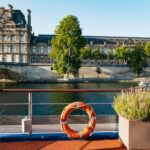
Right nearby is the Petit Palais, also tied to the 1900 Exposition Universelle. Today it houses the Musée des Beaux-Arts de la Ville de Paris. Even if you don’t go inside, the building gives you something to read visually: grand architecture, frescoes, and a calmer sense of space through its courtyard feel.
Why I like this pairing: they’re different flavors of the same idea. One is built for blockbuster events and big exhibitions. The other leans more museum-like, with art spanning antiquity to the early 20th century. After these two, you’ll start noticing the way Paris uses architecture as messaging.
Also, the tour keeps the time efficient. The stop lengths are short, so you don’t feel trapped, but you do get enough explanation to understand what you’re seeing.
Pont Alexandre III: ornament, power, and photo-friendly design
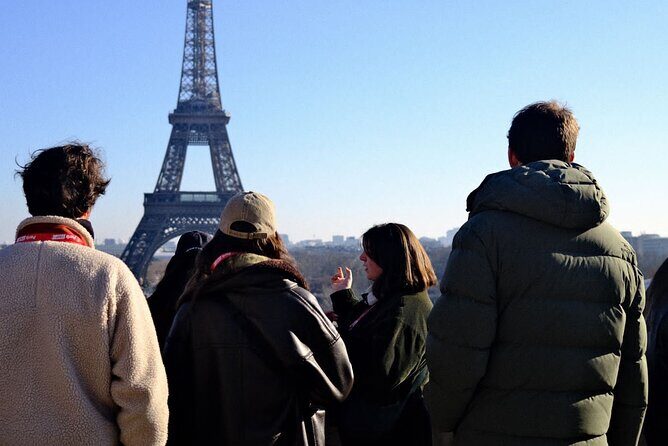
Next comes one of the star turns: Pont Alexandre III, created for the 1900 Exposition Universelle. It’s among Paris’s most ornate bridges, with gilded sculptures, intricate ironwork, and Art Nouveau lamps. The tour frames it as a symbol of Franco-Russian ties, which makes the decoration feel like history, not just decoration.
This is a great place to slow down. You get wide city views and the kind of detail that rewards a second look: the metalwork, the figures, the way the bridge frames the skyline and river.
Photo advice without overthinking it: if the light is right, take one wide shot from the side for context, then walk a few steps to catch a tighter composition that includes the sculptures and lampposts. The bridge is designed to impress from multiple angles.
The Seine as the main event: how the river shaped the fairs
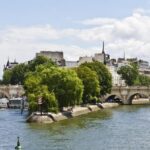
At this point, the tour zooms out. The Seine isn’t just scenery here. It was a central backdrop for grand exhibitions that showcased architecture, technology, and art. Landmarks along the banks, like the Eiffel Tower and the Grand Palais, helped shape the city’s landscape for the long run.
You also learn a key idea that makes the rest of the walk click: the river acted like a connector. It tied exhibition sites together and helped Paris sell a message of progress and cultural exchange. When you know that, you start looking at bridges and quays as part of one system, not random crossings.
This thematic shift is why the tour feels more valuable than a simple highlight route. You aren’t only collecting sights. You’re building a mental map of how the city organized a global event.
Other walking tours we've reviewed in Paris
Pont de l’Alma and the Liberty flame: fair legacies turned symbols
The walk then tracks World Fair leftovers with a few clever stops.
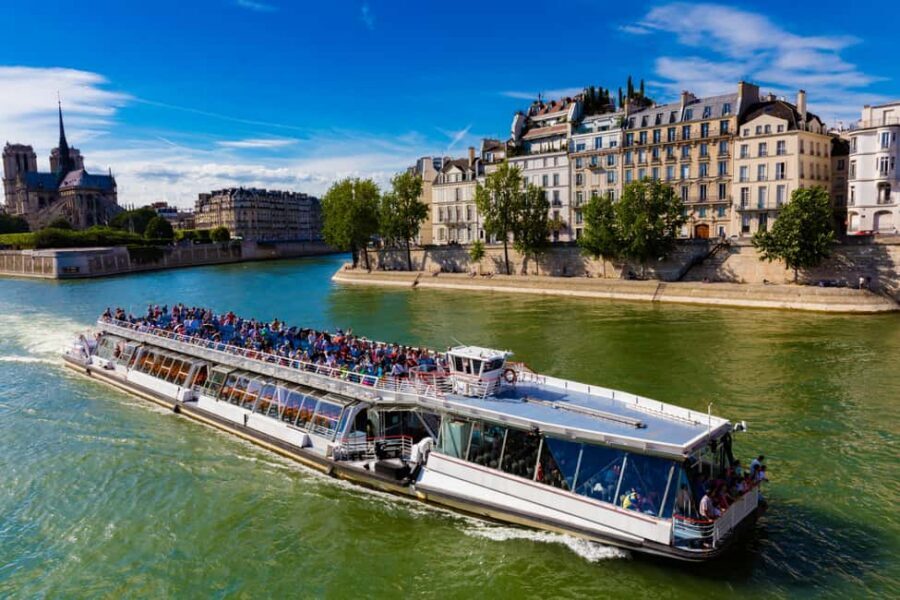
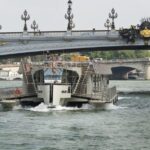
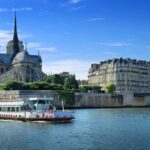
You’ll hear about Bateaux Mouches, which began as visitor transport for the 1867 Exposition Universelle and later became a sightseeing icon. It’s a useful detail because it shows how fair-era ideas stuck around and evolved into everyday Paris experiences. You don’t have to ride a boat to get the point, but it makes the idea of the Seine feel alive.
Then comes Pont de l’Alma, linked to the 1855 Exposition Universelle. It was rebuilt, but it retains the Zouave statue, originally used as a flood gauge. That connection matters because it shows another side of fairs: they accelerated not only the glamorous stuff, but also practical urban realities.
Near that area, you’ll see Flamme de la Liberté, a full-scale replica of the Statue of Liberty’s flame. It started as part of the world-fair story too, tied to the 1878 Exposition Universelle, when the Statue of Liberty was showcased in Paris before traveling to New York. Donated by the International Herald Tribune in 1989, the flame today also has an unofficial memorial connection to Princess Diana. The tour uses the layers to explain how international symbolism travels and mutates in a city.
Passerelle Debilly: a long footbridge with a fair-era footprint
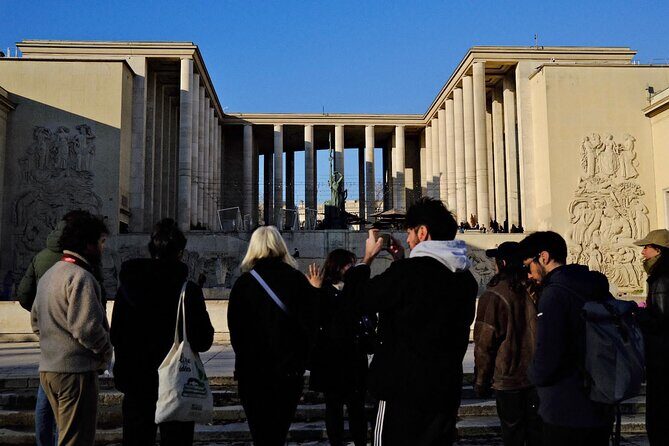
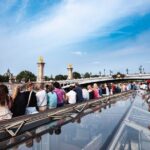
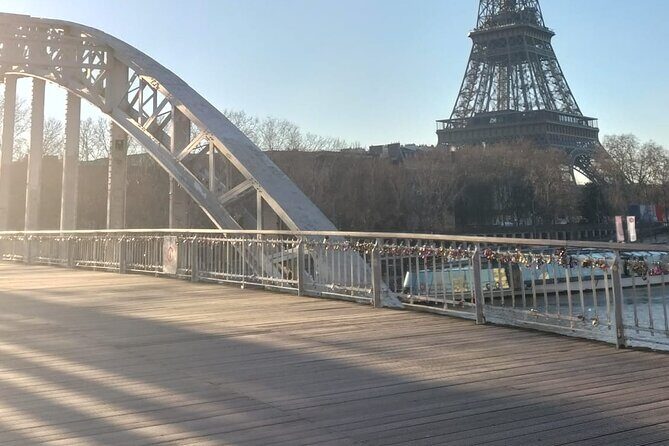
After the Liberty flame area, the route crosses to Passerelle Debilly, the Debilly Footbridge. Built for the 1900 Exposition Universelle, it spans about 120 meters over the Seine and links Quai Branly to Avenue de New York.
Why this stop is useful: you’re not only seeing the big-ticket landmarks. You’re also seeing the practical infrastructure that helps people move along the river. Footbridges like this make river areas more accessible and turn a viewing zone into an actual walking experience.
It’s also a nice pause for photos. A long span gives you that classic Paris river perspective, and the bridge itself becomes a framing device.
Palais de Tokyo and Palais de Chaillot: art on a world-fair timeline
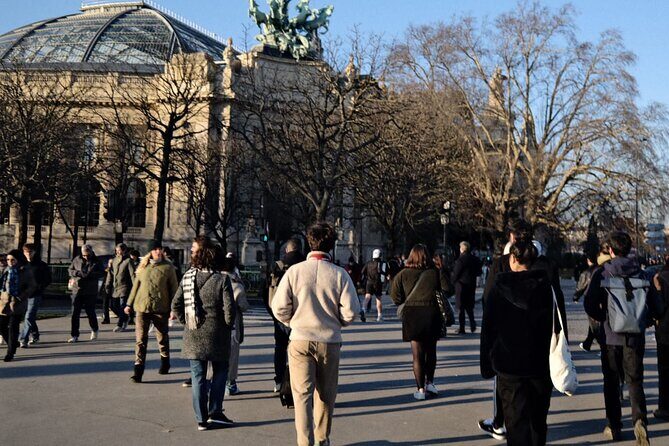
You’ll then head toward two buildings that help you feel the shift from one fair era to the next.
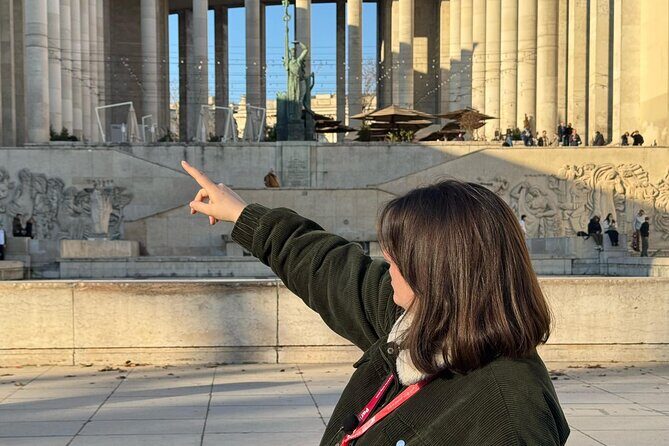
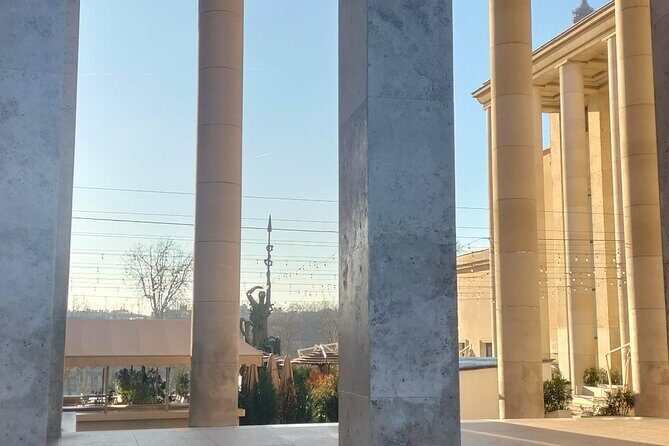
First is Palais de Tokyo, inaugurated in 1937 for an Exposition Universelle and now Europe’s largest center for contemporary art. Next is Palais de Chaillot, also built for the 1937 International Exposition. The design is credited to architects Léon Azéma, Jacques Carlu, and Louis-Hippolyte Boileau, and the tour emphasizes that these buildings were intended to outlast the event.
This is a strong part of the tour because it shows how fairs aren’t only a 19th-century story. They keep shaping Paris decades later. You get a natural contrast too: the route is built from ornate 1900-era landmarks, then it moves into 1937-era modernity and contemporary culture.
Practical note: you’ll likely be doing more looking than walking here. Don’t rush. Take the minute to understand the “why” so the architecture doesn’t blur together.
Trocadéro fountain and Pont d’Iéna: the Eiffel Tower’s entrance road
The route connects into the Eiffel Tower approach with stops designed for viewpoints.
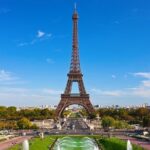
You visit the Trocadéro Fountain in the Trocadéro Gardens, built in 1937 as a replacement for an 1878 Exposition Universelle fountain. It’s famous for the water display and, most importantly for your walk, it gives you an excellent angle for Eiffel Tower views.
Then you reach Pont d’Iéna, a bridge tied to multiple Expositions Universelles: 1867, 1878, 1889, and 1900. The tour also notes that the bridge was commissioned by Napoleon I and that it became a symbolic entryway for millions of fair visitors. Today, it’s again in the spotlight as part of the Paris 2024 Olympic Games ceremonies and events. That “past meeting present” thread is the kind of thing that makes the walk feel current without losing its historical purpose.
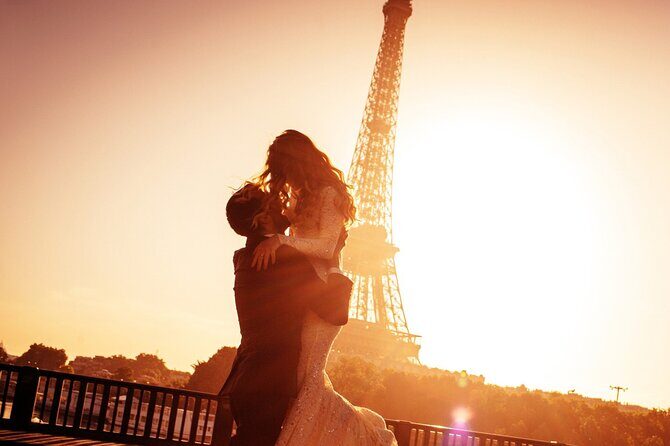
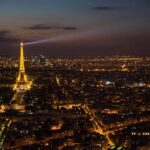
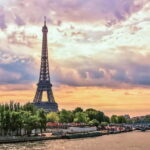
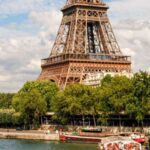
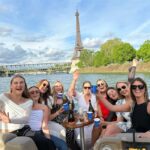
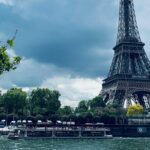
The final stop is the Eiffel Tower itself, built for the 1889 Exposition Universelle. The tour also includes the detail that it was initially criticized, then later became the icon of Paris and an engineering symbol. In the current Olympic context, it’s framed as a unifying landmark again, just like it once was for international fairs.
If you love photos, this is where you’ll want to linger. Even with a short stop time, you’ll get at least one clear, “I’m really in Paris” view plus better context for why the tower became the symbol it is today.
What you’re really paying for with this $43.26 tour
At $43.26 per person for about 2 hours, this isn’t a budget bargain. It’s also not a “pay for nothing” tour. The value is in the combination:
- Time-efficient route: you cover a lot of key river-and-fair terrain without wasting half a day hopping between distant areas
- A small group cap of 15: that usually means you hear the guide clearly and can ask questions
- Story depth, not random facts: the guide connects inventions, politics, and artistic breakthroughs to the buildings you can see
- Photo-ready viewpoints: bridges and river perspectives are naturally built into the itinerary
One more detail that matters: this tour includes a mobile ticket and is offered in English. You won’t waste energy figuring out access or translation, and that makes the whole experience smoother.
If you’ve visited Paris before and felt like you saw the same postcards everywhere, this is the type of tour that changes your mental map quickly. People in the reviews (including praise for Olivia) mention the route felt peaceful and that the facts were clear without being overwhelming.
Who should book this, and who might skip it
I’d book it if you want history that walks with you. If you like connecting architecture to real-world reasons, you’ll enjoy this. It’s also great for first-timers who want the biggest sights on the Seine with a different lens than the usual “what to see” route.
You might skip it if you only want a light sightseeing stroll with almost no context. This tour does explain things, and it’s built around that theme. Also, the walking is moderate, so plan for comfort.
Should you book the Paris World Fairs Seine walk?
Yes, if you want a 2-hour story-driven route that explains why Paris looks the way it does, with photo-friendly stops that feel more meaningful than a normal highlights list. The small group size and guides described as clear and enthusiastic (Olivia is specifically praised) make it easy to enjoy without feeling rushed or drowned in information.
If you’re the type who enjoys looking at a bridge or museum and wanting the “why,” this is a solid buy.
FAQ
How long is the Paris World Fairs walking tour?
It’s about 2 hours.
Where does the tour start and end?
It starts at Statue du Général Charles de Gaulle, Pl. Clemenceau, 75008 Paris and ends at Tour Eiffel, 5 Av. Anatole France, 75007 Paris.
Is the tour offered in English?
Yes, the tour is offered in English.
Is there an entry fee for the stops?
The itinerary notes Free admission for the listed sights.
How large is the group?
The tour has a maximum of 15 travelers.
What fitness level do I need?
The tour lists a moderate physical fitness level.
FAQ
What is the cancellation policy?
You can cancel for a full refund if you cancel up to 24 hours in advance of the experience start time. If you cancel less than 24 hours before, the amount paid is not refunded.