REVIEW · PARIS
Seine River Guided Cruise Champagne Option by Vedettes de Paris
Book on Viator →Operated by Vedettes de Paris · Bookable on Viator
A Seine cruise with Champagne is a fast Paris win. You get landmark views from the water plus a live French and English guide as you glide past the city’s most famous bridges and palaces. I especially like the short time commitment and the history nuggets that make the skyline feel less random. One heads-up: in some conditions the upper deck can be closed and the boat can get noisy, so you may need to ask the crew to turn up the commentary.
This is built for travelers who want the “I did the Seine” moment without losing half a day to logistics. The meet-up is at Port de Suffren (near public transport), the cruise runs about 1 hour, and you’ll receive a mobile ticket. The Champagne part is simple, but it’s also easy to miss if you don’t follow the bar procedure closely.
At $38.44 per person, it’s not a bargain, but it is a solid value if you want the view + guide + included drink in one go. If you’re hoping for a full sit-down dining experience, that’s not what this is.
In This Review
- Key points before you go
- A 1-Hour Seine Cruise That Fits Real Paris Plans
- Champagne Onboard: What’s Included and the One Step You Can’t Skip
- The Vedettes de Paris Boat: Seats, Decks, and Photo Reality
- Live Bilingual Guide: How the Commentary Actually Helps
- From Eiffel Tower Views to Trocadéro Light: The Route in Plain English
- Eiffel Tower: Built fast, doubted hard
- Holy Trinity Cathedral: Russian Orthodox presence on the Seine
- American Church in Paris: Tiffany windows and a green clock-tower
- Pont Alexandre III: A bridge that doubles as symbolism
- Pont de la Concorde: Bastille stone and political geography
- Hotel de Salm to Palais de la Légion d’honneur: French honors in green dome form
- Musée d’Orsay area: Former train station turned art magnet
- Institut de France: A powerful institution you can spot instantly
- Pont Neuf: The oldest stone bridge, lined with masks
- Pont Saint-Michel: Latin Quarter gateway
- Île de la Cité and Notre-Dame: Where Paris is said to begin
- Les Invalides and Napoleon’s tomb context
- Saint Genevieve statue: Paris’s patron saint from behind
- Arab World Institute: Culture and science along the river
- Hotel de Ville: City Council and the banquet hall reference
- Île Saint-Louis: Elegant 17th-century townhouses
- Conciergerie: A prison with Marie-Antoinette’s last chapter
- Louvre: Royal palace turned museum
- Place de la Concorde: Revolution execution site and an Egypt obelisk
- Grand Palais: Glass roof spectacle from the 1900 Exposition
- Flame of Liberty and Palais de Chaillot: American gift, riverward views
- Price and Logistics: Is $38.44 Worth It?
- When to Go: Chasing Light Without Overthinking It
- Who This Cruise Suits Best
- Final Decision: Should You Book It?
- FAQ
- How long is the Seine River Guided Cruise with Champagne?
- What’s included with the Champagne option?
- Do I need to pay extra for the Champagne onboard?
- Where does the cruise depart from?
- Are there multiple departure times?
- Is there food included in the ticket price?
- Does the guide speak English?
- What if I’m under 18?
- Do I need a printed ticket?
- What if the weather is bad?
Key points before you go
- Duval Leroy Champagne comes as one included glass, served via the boat bar with your ticket.
- Live bilingual commentary (French and English) helps you place what you’re seeing while you’re moving.
- About 1 hour is enough to hit big-name sights without wrecking your afternoon plans.
- You can choose multiple departure times (morning or afternoon), so you can aim for nicer light.
- The boat’s top seating can be affected by safety and noise, so plan to work with the deck you’re given.
A 1-Hour Seine Cruise That Fits Real Paris Plans
Paris can swallow your schedule whole. This cruise doesn’t. At about one hour, you get a clear slice of central Paris without committing to a full-day tour or stacking multiple museum hours.
I like that the timing is flexible too. There are multiple morning or afternoon departures, so you can match it to your day—before dinner, after lunch, or as a reset if you’ve been walking since breakfast. And since the meeting point is 2 Port de Suffren (75007), it puts you in a lively part of the river where you can easily connect to other plans afterward.
Also, the boat runs with a maximum of 220 travelers. It’s not a tiny private skiff, but it’s large enough to be organized and structured. Expect lines at boarding; don’t treat this like a quick hop-on tram.
Other champagne cruises we've reviewed on the Seine & in Paris
Champagne Onboard: What’s Included and the One Step You Can’t Skip
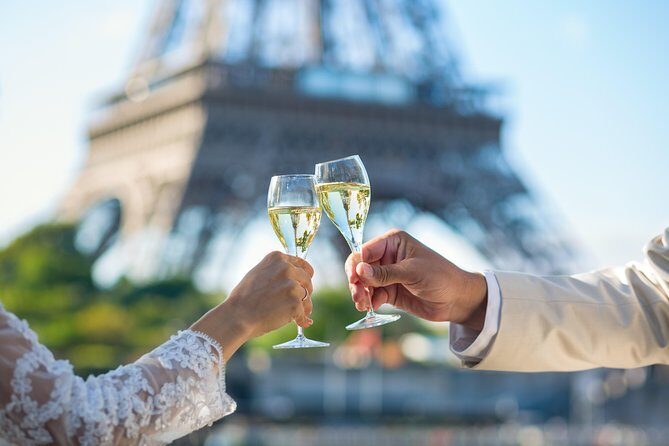
The included drink is a glass of Duval Leroy Champagne. That sounds straightforward, and it is—if you do the one crucial step.
When you’re onboard, you’ll need to go to the boat’s bar and show your ticket (smartphone or paper) to the staff/bartender to receive the included glass. If you don’t present your ticket, service may not happen for the included Champagne. It’s a simple process, but it’s also the #1 place where a mistake can turn a good deal into a disappointment.
What I like about this setup is that it keeps the cruise “light.” You’re not waiting around for a server to bring a drink to your seat. You can grab your Champagne, then go watch the next bridge roll by.
If you’re under 18, you won’t be served alcohol. You’ll still be offered non-alcoholic drinks, so the cruise remains a fun, family-friendly way to see the Seine.
The Vedettes de Paris Boat: Seats, Decks, and Photo Reality
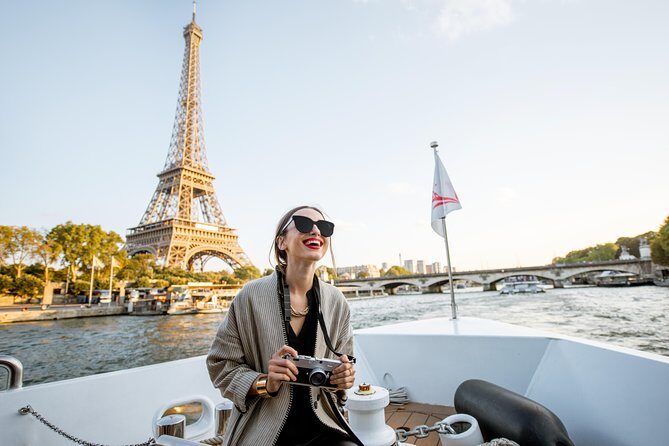
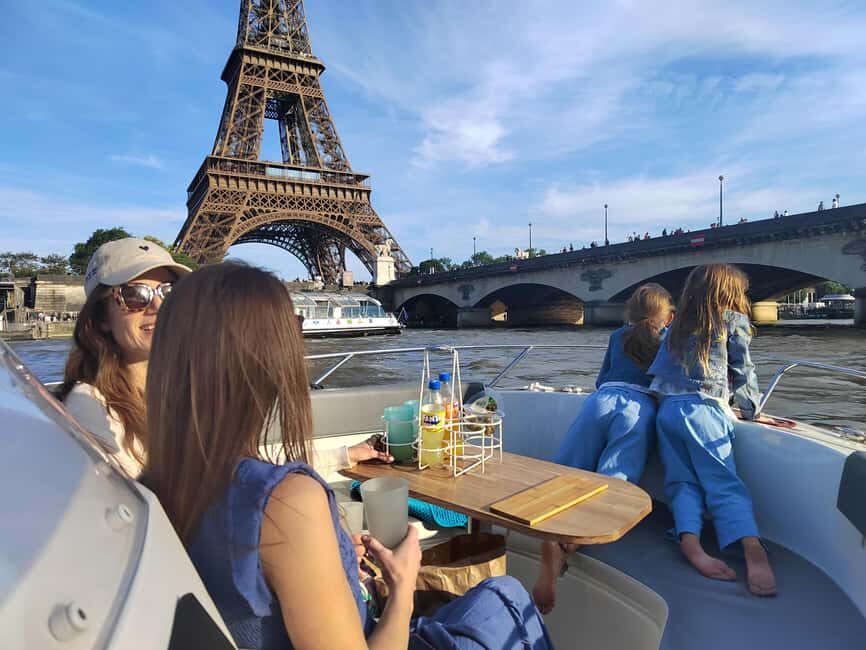
This is a sightseeing cruise first, and it’s designed for views. You’ll have two main layers of the experience: the deck you’re on, and the conditions that day.
A few practical notes:
- If you end up on the bottom level, the experience can still be very good. You’re close enough to feel the motion, and you’re still aligned to see key landmarks.
- If you choose or end up on the top deck, the payoff is the widest angles—great for photos.
- The upper decks may close for safety reasons depending on conditions. When that happens, you lose some open-air viewing space. Plan to be comfortable inside or wherever the crew directs you.
You’ll also be dealing with sound. The boat has noise—engines, wind, and lots of people talking. If you can’t hear the guide well, ask the crew to turn up the volume. That’s not a rude move; it’s literally part of what keeps the tour meaningful.
One more small perk: the boat is electric (green). It’s the kind of detail you don’t see from the outside, but it fits the feel of modern Paris tourism—less smoky, more comfortable for a short ride.
Live Bilingual Guide: How the Commentary Actually Helps
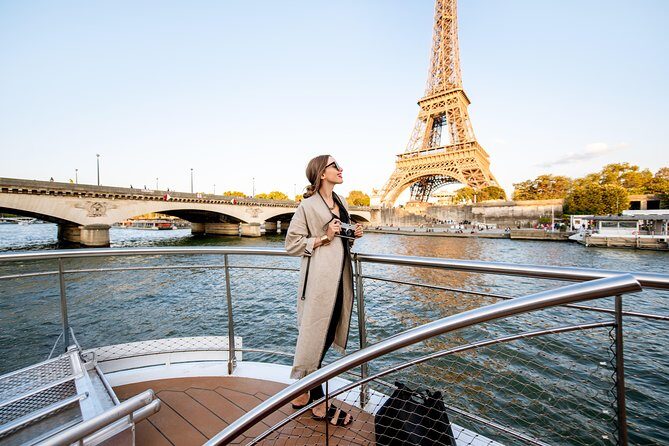
The cruise includes one live guide with commentary in French and English. On a 1-hour itinerary, that matters. Without a guide, you’ll recognize some sights by name, but you might miss why certain bridges are famous or how buildings relate to the river’s history.
I like how the guide format works here: it’s not a lecture. It’s quick, pointed, and timed to what you’re passing at that moment. That makes it easier to connect the dots while you still have a view of the object you’re hearing about.
There are also real examples of guides adding personality and staying on point even when it’s hot or noisy. Some cruises have guides who were very helpful with boarding, and others have guides who made the experience feel extra memorable around big evening light. If you’re the type who loves facts but hates reading plaques, this is your lane.
If the audio feels low, don’t struggle through it. Ask the crew for help with volume. On a moving boat, small fixes make a big difference.
From Eiffel Tower Views to Trocadéro Light: The Route in Plain English
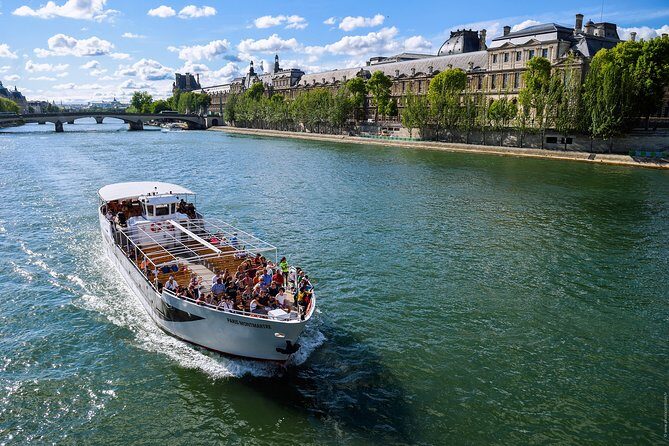
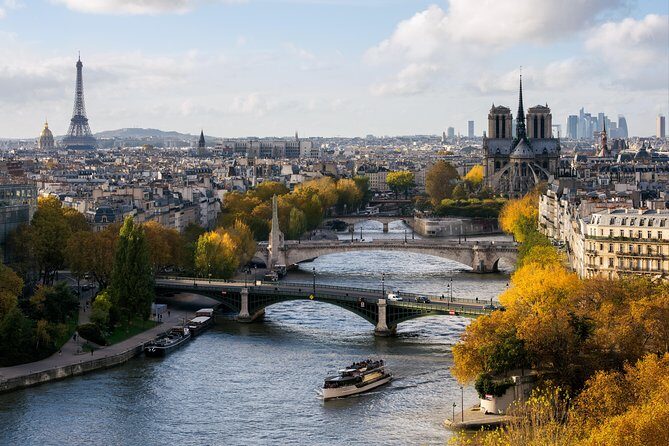
You start at Port de Suffren, close to the Eiffel Tower zone, and you’ll move along the Seine toward some of the most recognizable monuments in central Paris. The beauty is that the river compresses distance: you see multiple neighborhoods and styles back-to-back.
Here’s what to look for as each highlight comes into view—and what makes it worth your attention.
Other vedettes de paris cruises we've reviewed on the Seine & in Paris
Eiffel Tower: Built fast, doubted hard
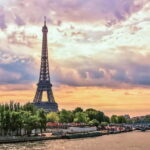
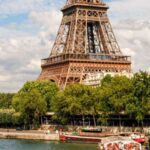
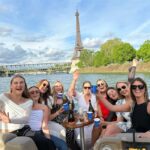
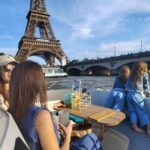
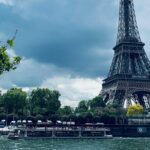
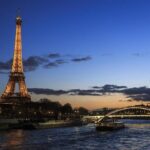
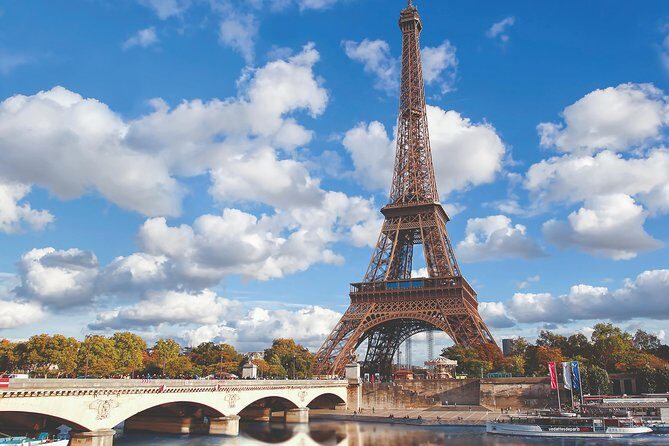
You’ll see the Eiffel Tower early in the cruise. Gustave Eiffel’s tower was built for the 1889 Universal Exhibition, and it was engineered to last longer than some critics expected. Details like its height and weight aren’t just trivia; they explain why it still dominates the skyline even from the water.
Even better, if you’re cruising in the evening, you may catch the tower when the lighting kicks in—one of those “how is Paris so photogenic?” moments.
Holy Trinity Cathedral: Russian Orthodox presence on the Seine
Next up is the Holy Trinity Cathedral, the Russian Orthodox church sometimes linked with a Franco-Russian school and cultural spaces. From the river, the scale and shape feel different than from street level. You’ll get a cleaner view of how the complex anchors that part of the Left Bank.
American Church in Paris: Tiffany windows and a green clock-tower
You’ll pass the American Church in Paris, notable for its green clock-tower and stained-glass windows by Louis Comfort Tiffany. This is a great stop for anyone who thinks Paris is only French art and French architecture. It’s a reminder that the city has been a magnet for many communities.
Pont Alexandre III: A bridge that doubles as symbolism
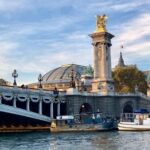
The Pont Alexandre III is one of the most ornate bridges in Paris. It was built for the 1900 Universal Exhibition and tied to the Franco-Russian alliance. Look for the coat of arms features and the river-themed figures on either side; the bridge is basically a grand public monument disguised as infrastructure.
Pont de la Concorde: Bastille stone and political geography
Pont de la Concorde is built using stones from the former Bastille prison, after it was stormed in 1789. That’s a powerful story to carry as you slide toward major civic landmarks. This bridge also helps you “read” the city: the river becomes a map that points you toward the National Assembly and the Place de la Concorde area.
Hotel de Salm to Palais de la Légion d’honneur: French honors in green dome form
You’ll see the green-domed Hotel de Salm, now tied to the Légion d’honneur under Napoleon I. If you’re the type to love how France labels its values with architecture, this is a neat moment. The dome gives you an unmistakable silhouette against the water.
Musée d’Orsay area: Former train station turned art magnet
The old Orsay railway station became today’s art museum space. The clue is in the structure: it was designed for rail, then repurposed to hold 19th-century art, including names like Renoir, Monet, and Van Gogh. Even if you’re not stopping inside the museum, the cruise view helps you appreciate the architecture you’d otherwise walk past.
Institut de France: A powerful institution you can spot instantly
You’ll pass the Institut de France building, built with funds from Cardinal Mazarin. The big idea here is not just the building’s age; it’s that France has long used institutions to protect and run culture—especially through the Académie Française and its mission around the French language.
Pont Neuf: The oldest stone bridge, lined with masks
Pont Neuf is the oldest stone bridge with pavements rather than houses built along it. The highlight is the line of 381 stone masks, each decorated and unique. From the river, those masks are like a moving gallery you can’t quite fully capture on one photo—so enjoy the quick glance and then look again as you pass.
Pont Saint-Michel: Latin Quarter gateway
You’ll see Pont Saint-Michel, built at Napoleon III’s request. It leads toward the Latin Quarter, a name tied to students who spoke Latin at the old University of Paris. This is one of those moments where the bridge tells a story about learning and culture more than engineering.
Île de la Cité and Notre-Dame: Where Paris is said to begin
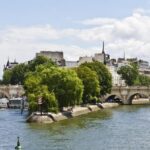
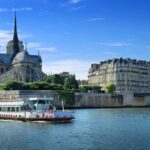
The cruise passes Île de la Cité, traditionally considered the birthplace area of Paris (the earlier tribe settlement is tied to Lutetia). Then you’ll come into view of Notre-Dame Cathedral, with construction starting in 1163 and finishing around 1345.
Look for the gargoyle and sculpture details from the river perspective. Even if you don’t go inside, the scale reads clearly when you’re floating past at water level.
Les Invalides and Napoleon’s tomb context
The Hotel des Invalides is another major sight: a military hospital ordered by Louis XIV, with the royal chapel housing the tomb of Napoleon I. Seeing it from the Seine gives the building a grounded, serious presence—less museum vibe, more “this is where France remembers.”
Saint Genevieve statue: Paris’s patron saint from behind
You’ll also spot the statue of Saint Genevieve, sculpted by Paul Landowski, who later created Christ the Redeemer in Rio. The interesting bit here is positioning: it’s described as facing away from you, with her back turned. That detail is a reminder that not every landmark gives you the perfect postcard angle—so enjoy the surprise.
Arab World Institute: Culture and science along the river
The Arab World Institute is a cultural center focused on history, art, society, religions, and science. It was inaugurated in 1987 by President François Mitterrand. This stop makes the cruise feel more current, not stuck only in medieval and royal Paris.
Hotel de Ville: City Council and the banquet hall reference
You’ll pass the Hotel de Ville de Paris, seat of the city council since 1357. The building’s inspiration includes Neo-Renaissance style, and it mentions a banquet hall designed with a connection to the Hall of Mirrors in Versailles. This is the kind of civic landmark that makes Paris feel like a living political center, not just a set of postcard scenes.
Île Saint-Louis: Elegant 17th-century townhouses
On Île Saint-Louis, you’ll see older prestigious buildings like the Hotel Lambert and Hotel Lauzun. This island often feels quieter in the mind than the mainland, and the cruise gives you a smooth overview of how it sits in the river.
Conciergerie: A prison with Marie-Antoinette’s last chapter
You’ll pass the Conciergerie, built in the 14th century under Philip IV, later turned into a prison. It’s tied to Queen Marie-Antoinette, who spent her last two months there before being executed in 1793 at Place de la Concorde.
From the water, the building can look surprisingly calm. That contrast is part of the point: Paris history is often right next to everyday movement.
Louvre: Royal palace turned museum
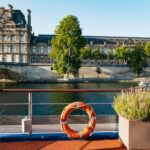
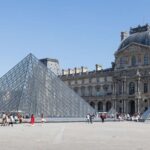
You’ll see the Louvre from the river. It used to be a royal palace and became a museum in 1793. The scale here is hard to grasp from street level, but floating nearby gives you a sense of breadth—multiple façades, long galleries, and a huge cultural footprint.
Place de la Concorde: Revolution execution site and an Egypt obelisk
You’ll pass Place de la Concorde, connected to the French Revolution executions of King Louis XVI and Queen Marie-Antoinette. The centerpiece is the Luxor obelisk, brought to France in 1836. It’s a striking moment because it’s not French-only history. The river becomes a channel for world history too.
Grand Palais: Glass roof spectacle from the 1900 Exposition
You’ll see the Grand Palais, built for the 1900 Universal Exhibition. The glass roof is a signature feature. Today it hosts cultural events, exhibitions, and other public uses, which makes it feel less like an artifact and more like a tool Paris still uses.
Flame of Liberty and Palais de Chaillot: American gift, riverward views
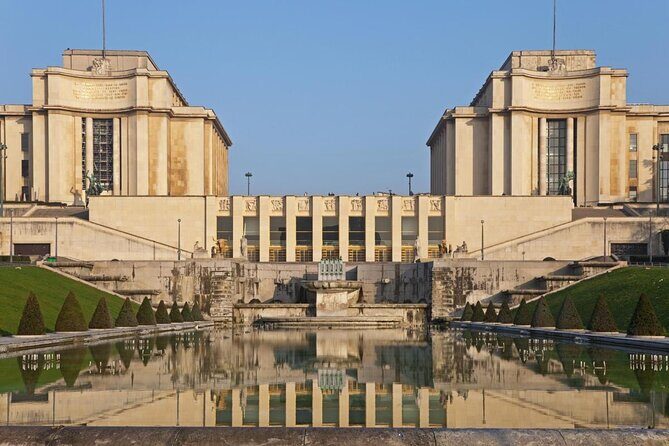
Near Trocadéro you’ll encounter the Flame of Liberty, a reproduction of the Statue of Liberty’s flame made as a gift linked to restoration efforts. Then the route reaches the Palais de Chaillot, built for the 1937 Universal Exhibition and now home to multiple museums and cultural spaces.
This section is great for photos because the architecture frames the river and the view feels slightly wider.
Price and Logistics: Is $38.44 Worth It?
Here’s how I judge this kind of ticket. You’re paying for:
- A paid view from the river (so you don’t have to “hunt” viewpoints)
- A live guide that compresses history into a short ride
- One included glass of Champagne
At $38.44, it’s not the cheapest way to see Paris, but it’s also not pretending to be fine dining. The value lands when you want convenience and guidance. If you’re already doing major museums later, the cruise works as a “connecting tissue” between neighborhoods.
It also helps that the cruise is about one hour, so you’re not sacrificing a full afternoon. If you’re trying to fit Paris into a tight itinerary, this is a clean way to do it.
One caution: boarding can involve lines. If you arrive at the last minute or you’re hoping to rush, this is where stress can sneak in. Give yourself a little cushion.
When to Go: Chasing Light Without Overthinking It
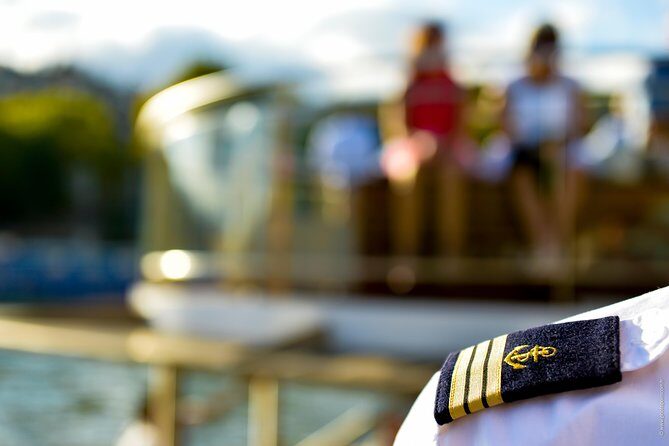
The best time depends on what you want your photos to feel like.
- If you want the city to sparkle, plan around evening light. Some cruises have moments where the Eiffel Tower lighting creates a lasting memory.
- If you go in hotter midday conditions, the top deck can feel intense. One helpful strategy is to decide quickly where you’re comfortable and then focus on the view rather than relocating every few minutes.
If you’re sensitive to heat or noise, it can be worth asking where you should sit once onboard. If the upper deck is open, you might prefer it. If it’s closed, don’t assume your photos will fail—you can still capture strong landmark angles from the lower level.
Who This Cruise Suits Best
This is a good fit if you want:
- A fast overview of central Paris landmarks
- Bilingual live narration so you don’t get lost in names
- A simple included Champagne moment without planning a bar stop
- A low-effort activity that balances the walking-heavy side of Paris
It’s also a decent choice for first-timers who feel overwhelmed. You’ll see a lot of “big labels” in a short time, and the guide helps you understand what each one signals.
If you’re a strict history nerd who wants museum-level detail, you’ll probably still enjoy it, but you’ll want to pair it with at least one museum or neighborhood walk. This cruise gives you the outline, not a thesis.
Final Decision: Should You Book It?
I’d book it if you want a short, guided Seine experience with an included Champagne glass and you’re okay with a standard boarding line and the fact that conditions can affect deck access.
Skip it only if you’re mainly looking for a quiet, private, sit-down meal experience. This is more about views, movement, and a guided tour that keeps a steady pace.
One more practical thought: do the Champagne step correctly. Bring your ticket and show it at the bar to get your included Duval Leroy glass. That single move protects your value.
And if weather forces a change, the experience is set up to offer an alternative date or a full refund, so you’re not stuck if the sky decides to rain on your plans.
FAQ
How long is the Seine River Guided Cruise with Champagne?
The cruise lasts about 1 hour.
What’s included with the Champagne option?
You get 1 glass of Duval Leroy Champagne plus the 1-hour sightseeing cruise and live guided commentary in French and English.
Do I need to pay extra for the Champagne onboard?
The Champagne option includes a glass, but you must present your ticket at the boat bar to receive it.
Where does the cruise depart from?
The meeting point is 2 Port de Suffren, 75007 Paris, France.
Are there multiple departure times?
Yes, the cruise offers multiple morning or afternoon departure times.
Is there food included in the ticket price?
No. Food is not included.
Does the guide speak English?
Yes. The guide provides French and English commentary.
What if I’m under 18?
Alcohol is served only to travelers 18 and above. Under 18, you’ll be served non-alcoholic drinks.
Do I need a printed ticket?
You can use a mobile ticket (or paper). You’ll need to show your ticket at the bar for the included Champagne.
What if the weather is bad?
This experience requires good weather. If it’s canceled due to poor weather, you’ll be offered a different date or a full refund.