REVIEW · PARIS
Seine River Direct Access Guided Cruise
Book on Viator →Operated by Vedettes de Paris · Bookable on Viator
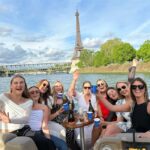
Paris looks different from the water. This Seine cruise stacks huge sights into about one hour with a live guide narrating as you glide by. I like that the commentary is built for viewing in real time, and I especially love the panoramic windows that make the city feel close instead of distant. The one catch: on some days, the English portion can be hard to catch if you’re sitting farther back or the sound carries poorly.
You also get the practical win: 100% electric boat means a quieter ride and an easy, low-effort way to sightsee without running between neighborhoods. There are morning and afternoon departures, and you can keep it simple with a mobile ticket. Champagne is available to buy onboard if you want a toast while you watch Paris go by.
Plan for weather because the experience is partly about where you stand or sit. In cooler months the top deck can bring wind, and in hot sun you might want to stay inside until the boat gets moving, like the crew advises through the seating flow.
In This Review
- Key things to know before you board
- Why this 1-hour Seine cruise works when your schedule is tight
- Getting on at Port de Suffren: your easiest “start line” in Paris
- The electric boat feel: comfort, photos, and where the view is best
- How the narration builds a route you can actually understand
- Eiffel Tower to the Seine bridges: what to look for, and what it means
- Pont de la Concorde, Musée d’Orsay, and Paris reinvented
- More than landmarks: Institut de France, Académie Française, and the Pont Neuf masks
- Ile de la Cité and Notre-Dame from the river
- Arab World Institute, Île Saint-Louis, and the City Hall stop
- Louvre, Place de la Concorde, Grand Palais, and Palais de Chaillot
- Morning vs afternoon departures: light, crowds, and comfort
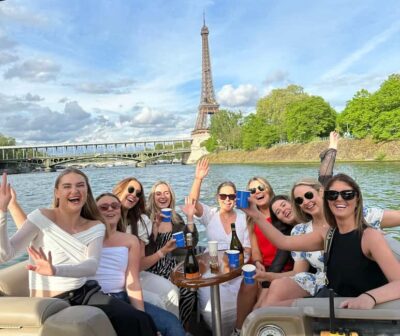
- Champagne onboard: what’s included and what to plan
- Practical tips so you enjoy the full hour
- Should you book this Seine River Direct Access Guided Cruise?
- FAQ
- How long is the Seine River Direct Access Guided Cruise?
- Is the cruise guided and offered in English?
- Do I need to print my ticket?
- Can I buy champagne onboard?
- Where does the cruise start and end?
- What if the cruise can’t run due to weather or technical problems?
Key things to know before you board
- Live bilingual narration: the guide explains landmarks as you pass them, so you’re not guessing what you’re looking at.
- Big-window viewing: panoramic sides make it easier to frame photos and read details.
- 100% electric cruise: smooth, modern boat feel for a classic route.
- A lot of famous stops in one loop: from the Eiffel Tower area to the Louvre and Grand Palais zone.
- Buy champagne onboard: adult travelers can purchase alcohol; minors get non-alcoholic drinks.
Why this 1-hour Seine cruise works when your schedule is tight
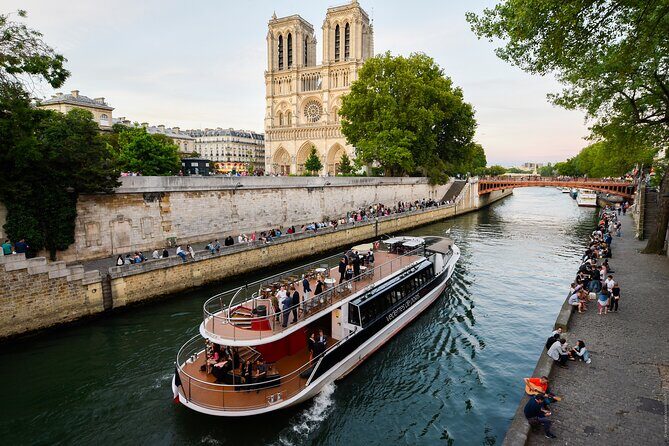
If Paris is your first stop, you often have that problem: you want the big-name sights, but you don’t want your day turned into a walking contest. This cruise is designed to solve that. You get a guided view of major landmarks across both banks, and you come back to the same starting point in about an hour.
The value is not just convenience. The live guide turns what could be random postcard scenery into something you can actually place on a map. When someone explains why the Eiffel Tower was built for the 1889 Universal Exhibition, or what the gold leaf and nymphs mean on the Alexandre III bridge, you start seeing patterns across the city—engineering, politics, and art—rather than isolated photos.
And because the group size is capped (up to 220), you’re not dealing with a floating stadium. It’s still a public attraction, so you’ll want to arrive with a plan for where you want to sit, but it generally stays workable.
Other boat tours in Paris
Getting on at Port de Suffren: your easiest “start line” in Paris
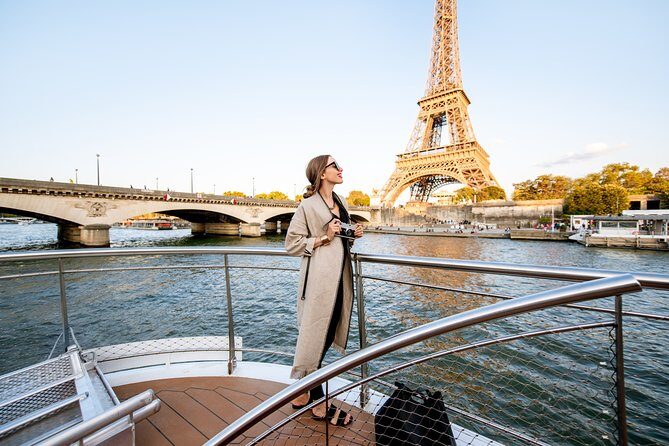
Your boarding point is Port de Suffren (2, 75007 Paris). Ending back at the same place makes this one of the more straightforward activities in the city. No cross-town transfer. No mystery.
This start point matters for two reasons. First, it’s a good way to avoid a midday scramble if you’re trying to fit sightseeing around museum tickets or meals. Second, being near public transportation helps if you’re building this into a larger itinerary.
To make the boarding experience smoother, do two things. Keep your mobile ticket ready on your phone, and arrive a bit early so you can settle before the boat starts moving. If you’re trying to grab the best photo angle, being “almost on time” can cost you the seat or spot you wanted.
The electric boat feel: comfort, photos, and where the view is best
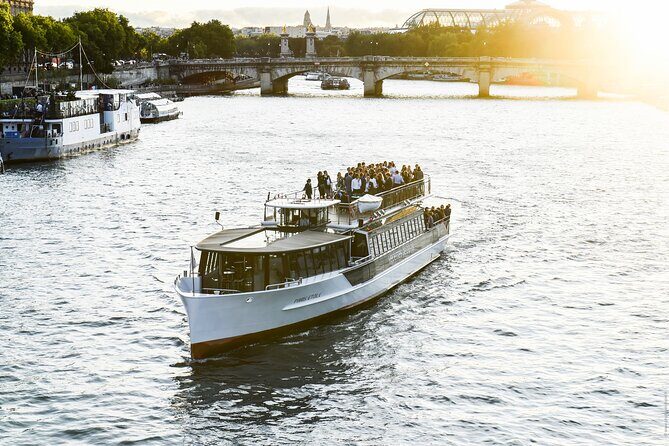
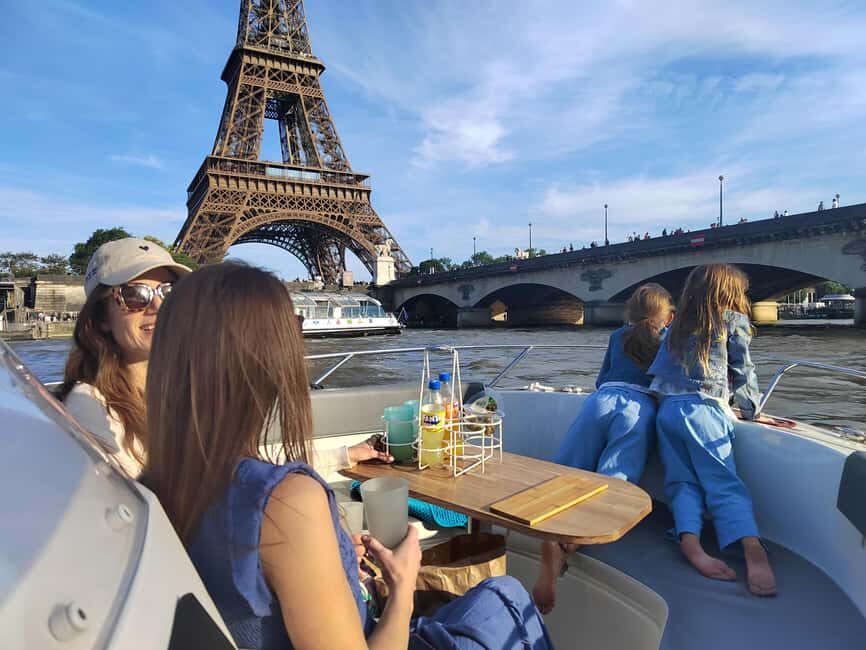
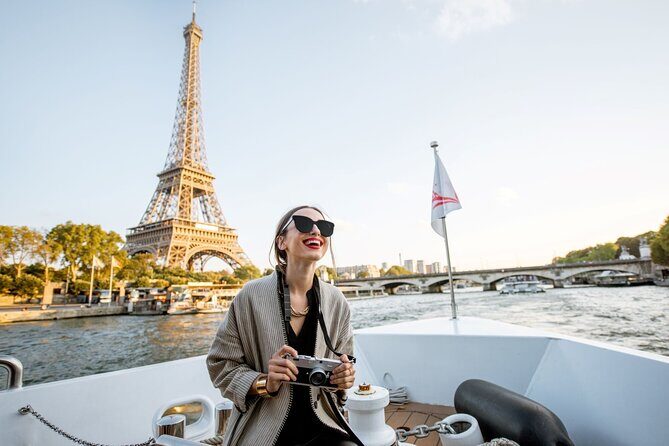
The cruise is on a 100% electric boat for about an hour. That detail is more than marketing. Electric boats tend to feel calmer and quieter, which makes it easier to hear the guide when you’re close enough to the narration.
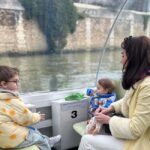
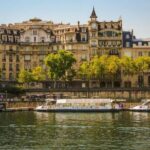
Onboard, you’ll have panoramic windows along the sides, which is the big advantage for sightseeing. When you’re inside, you can keep shooting through the glass without constantly changing positions. If you’re thinking, I want the breeze and the skyline, you’ll also want to consider the weather. People often shift between inside seating and the outside view depending on how cold or sunny it is.
My practical advice: choose your comfort first, then use the windows for photos. If it’s chilly or windy on the top deck, a warm layer is not optional. If it’s hot, don’t underestimate how quickly the light can turn into oven-mode before the boat gets going.
How the narration builds a route you can actually understand
This cruise is not just passing famous buildings. The guide’s job is to connect each landmark to a specific story—construction, purpose, alliances, or cultural power. That changes how you experience the Seine.
As you move along, you’ll hear about:
- The Eiffel Tower’s engineering origins and how it survived its own controversy.
- Bridges that act like “history lessons in stone,” including the use of Bastille materials.
- Landmarks that show Paris reinventing itself, like an old railway station turned into a museum.
The big payoff is that the city stops being a blur of names. You start noticing details on purpose: a bridge’s decoration scheme, a dome’s silhouette, a sculpted figure, even how the architectural language shifts from one stretch of the river to the next.
One more listening tip. The tour is offered in English, but it’s also a bilingual-style presentation. If you care about catching every word, sit where sound reaches you best instead of choosing the furthest spot for views only.
Eiffel Tower to the Seine bridges: what to look for, and what it means
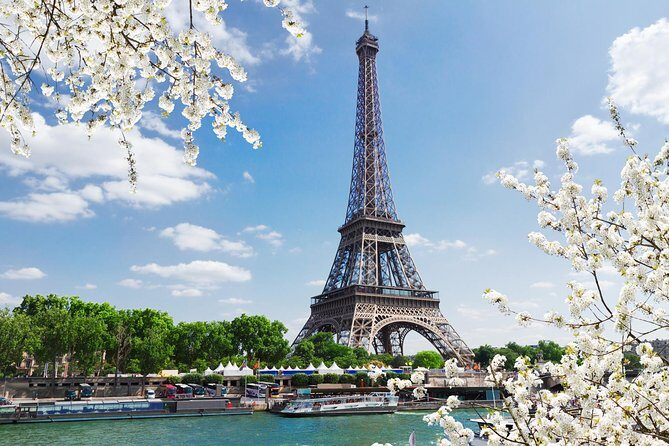
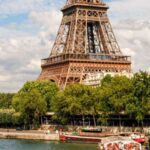
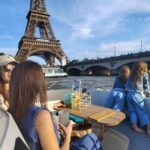
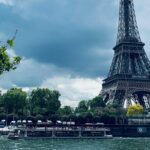
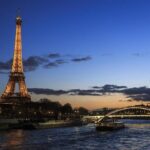
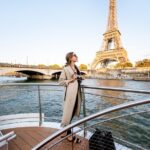
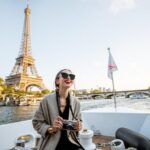
You’ll begin with the Eiffel Tower area. It was built for the 1889 Universal Exhibition and finished in a little over two years. It reaches 324 meters, weighs about 7,300 tonnes, and it was controversial at the time—Parisians were scandalised by its metal look and height. Later, a radio antenna was added in 1903, helping it avoid demolition. Now it’s the most recognized symbol of Paris, and the river gives you a new angle to appreciate the scale.
Next, you’ll pass the American Church in Paris, with its distinctive green clock-tower. It was the first American church built outside the US in 1931, and its stained-glass windows were designed by Louis Comfort Tiffany.
Then comes the Hotel des Invalides, built on orders of Louis XIV as a military hospital for injured soldiers and officers. Today, its royal chapel holds the tomb of Napoleon I. The golden dome is the kind of detail you only fully notice from a distance, especially from water level.
After that, the cruise highlights the Alexandre III bridge, built for the 1900 Universal Exhibition and linked to the Franco-Russian Alliance. Look for the Paris coat of arms covered in gold leaf and the nymph figures tied to the river Seine. On the far side, you’ll see the Saint Petersburg arms and nymphs for the river Neva.
These bridges are why a guided cruise beats a self-guided float. When you know what each decoration symbolizes, you stop thinking, That looks pretty, and start reading it like a picture book.
Other guided tours in Paris
Pont de la Concorde, Musée d’Orsay, and Paris reinvented
The Pont de la Concorde is a standout because it carries Revolutionary-era material history. It was built using stones from the former Bastille prison, after the Bastille was stormed in 1789. From the boat, it’s a quick way to connect a major civic turning point to the physical city you’re seeing now.
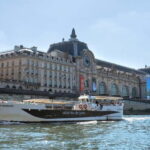
You’ll also pass by the former Orsay railway station, later transformed into the Musée d’Orsay in the 1980s. The idea here is transformation: a rail gateway turned into a home for 19th-century art. Expect the guide to point toward major Impressionists and Post-Impressionists connected with the museum, including Auguste Renoir, Claude Monet, and Vincent van Gogh.
This is one of the reasons I like a short cruise. You get cultural context without needing to commit to a full museum morning. If your time in Paris is tight, it helps you decide what museum visit is worth your energy later.
More than landmarks: Institut de France, Académie Française, and the Pont Neuf masks
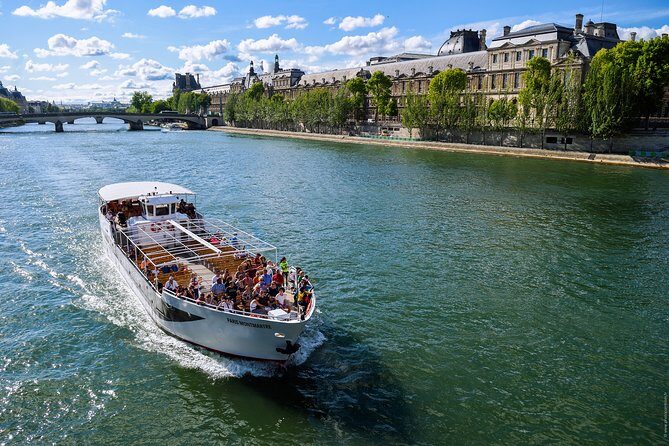
As you continue, you’ll cruise by the Institut de France, originally the Collège des Quatre Nations, funded through money left by cardinal Mazarin in 1661. It houses five academies, and the most famous is the Académie Française, a group whose work supports the French language, including updating and modifying the official dictionary.
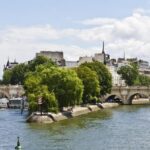
Then comes the Pont Neuf, which is actually the oldest bridge in Paris. It was among the first stone bridges to include pavements rather than houses lined along it. The feature that really grabs your attention from the water: 381 grimacing stone masks, each uniquely decorated.
If you like details, this is where the cruise pays off. You’re moving, so you can’t slow down like you would on a walk. But the guide’s cueing helps you spot the special features before the view slips away.
Ile de la Cité and Notre-Dame from the river
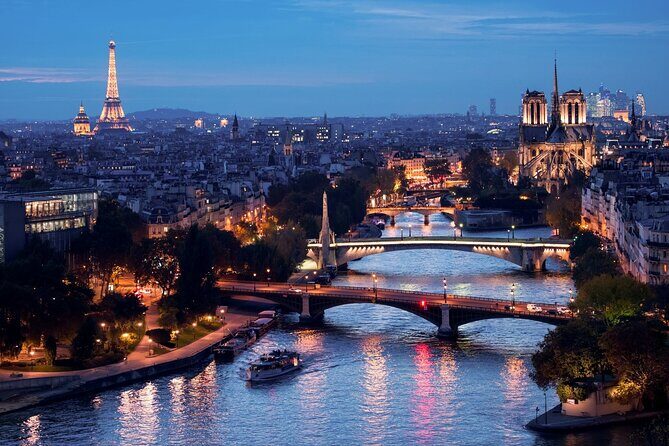
As the route reaches the central river islands, you’ll learn what makes Île de la Cité so important. It’s considered the presumed birthplace of Paris, first settled by the Parisii tribe about 300 years before the Common Era, when the island was called Lutetia.
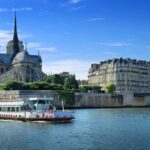
The big visual moment is Cathedrale Notre-Dame de Paris. Construction started in 1163 and finished nearly two centuries later, around 1345. From the Seine, you’ll hear about the cathedral’s gargoyles and sculptures, and you’ll get a sense of the scale that makes Notre-Dame feel taller than it looks in photos. The south rose window, the Rose du Midi, is dedicated to the New Testament and was described as a gift from Saint Louis.
You’ll also pass the Tournelle Bridge, where you can spot the statue of Saint Genevieve, patron saint of Paris. The sculptor mentioned is Paul Landowski, who later sculpted the Christ the Redeemer statue in Rio de Janeiro. That connection is fun because it links Paris sculpture talent to an icon far beyond France.
Arab World Institute, Île Saint-Louis, and the City Hall stop
A cultural pivot comes at the Arab World Institute, inaugurated in 1987 by President François Mitterrand. It focuses on the history, art, society, religions, and science of the Arab world. From the Seine, it’s a reminder that Paris is more than medieval churches and grand boulevards.
Then you’ll see Île Saint-Louis, known for prestige and older residential streets. The guide often ties this area to 17th-century town houses like the Hotel Lambert and Hotel Lauzun. The names are not just trivia. They frame the island as a long-term home for influential residents, and not just a modern tourist shortcut.
You’ll also pass Hotel de Ville de Paris, the seat of the Paris City Council since 1357. The construction draws inspiration from Neo-Renaissance style, and it includes a banquet hall designed using the Hall of Mirrors in Versailles as a template.
Louvre, Place de la Concorde, Grand Palais, and Palais de Chaillot
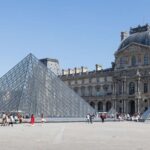
The cruise reaches the river stretch where the big civic and cultural names cluster. The Louvre is described as a former royal palace turned museum in 1793. It’s one of the largest monuments in Paris, with over four kilometres of façades and nearly 14 kilometres of galleries. The guide may reference marquee works like Winged Victory of Samothrace, Venus de Milo, and Mona Lisa.
You’ll also pass Place de la Concorde, tied to the French Revolution. It’s the site where King Louis XVI and Queen Marie-Antoinette were executed. The centerpiece is an obelisk from Luxor, Egypt, described as 34 centuries old and brought to France in 1836.
Then the route includes Grand Palais, built for the 1900 Universal Exhibition. The glass roof is described as the largest in Europe. Today it’s used for cultural events and exhibitions, and it even hosts a funfair and the largest skating rink in Europe.
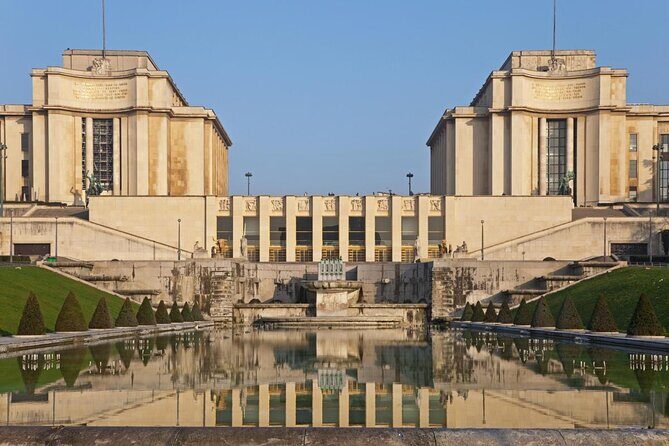
Finally, toward the Trocadero area you’ll see Palais de Chaillot, built in 1937 for the Universal Exhibition, with two Neoclassical pavilions and a view over the Trocadero gardens. The buildings house the City of Architecture and Heritage, the National Navy Museum, the Museum of Humankind, and the National Theatre of Chaillot.
This end stretch is a nice reminder: the Seine cruise doesn’t just show monuments. It shows how Paris repurposes its architecture again and again.
Morning vs afternoon departures: light, crowds, and comfort
Morning and afternoon departures are offered, so you can pick based on your day plan. If you’re chasing softer light for photos, morning often feels easier. If you want a more relaxed pace later in the day, afternoon works well.
But comfort comes first. The boat’s motion helps once you’re underway, yet you may feel temperature shifts while waiting to board and before the cruise settles into a steady pace. Bring a wind layer even if the day seems mild. If it’s sunny, plan for heat inside too.
A small but important tip for your photos: take a few shots from inside the first minutes, then step out only when you have a clear angle. That way you don’t end up missing the best view because you were adjusting your gear at the wrong moment.
Champagne onboard: what’s included and what to plan
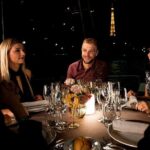
Champagne is not automatically included. It’s available for purchase onboard. The alcohol option mentioned is Duval Leroy champagne.
There’s also a clear age rule: alcoholic drinks are served only to travelers 18 years old and above. If you’re traveling with kids, you won’t need to worry about alcohol service being the center of the experience. The cruise is still primarily about the sights and narration.
If you want to keep it simple, you can do the cruise without buying anything and still feel like you got a proper experience. If you do order champagne, treat it like a bonus that matches the view, not the reason you chose the boat.
Practical tips so you enjoy the full hour
- Arrive early enough to choose your spot. Seats and deck positions matter for hearing the guide and getting photos.
- Dress for wind and weather. Even in mild seasons, the top deck can feel sharper.
- Use the windows. They’re made for sightseeing, and they help you frame landmarks without constantly shifting position.
- Listen closely at the key landmark moments. When the guide points out the meaning behind bridges and façades, you’ll notice details you would otherwise miss.
- Have a plan if your timing is tight. If something delays you, you may be offered the next available cruise, but it’s smart to keep some wiggle room in your day.
Should you book this Seine River Direct Access Guided Cruise?
I’d book it if you want a fast, guided Seine experience that hits major Paris highlights without turning your day into a long walking loop. It’s especially a good choice for first-timers, families who want a calmer activity, and anyone who wants a guided story while they watch the city slide past.
I would think twice if you’re extremely sensitive to audio clarity or you know you’ll only enjoy the cruise if you catch every word in English. On some days, English can be harder to understand depending on where you sit and how sound carries. And if weather is questionable, be ready for adjustments, because this kind of cruise depends on conditions.
If you want a high-value introduction to Paris from the water, this one-hour electric boat ride is a smart way to start.
FAQ
How long is the Seine River Direct Access Guided Cruise?
It runs for about 1 hour.
Is the cruise guided and offered in English?
Yes. There is a live guide, and the cruise is offered in English.
Do I need to print my ticket?
No. You can use a mobile ticket.
Can I buy champagne onboard?
Yes. Champagne is available to purchase onboard, but it is not listed as included.
Where does the cruise start and end?
It starts at 2 Port de Suffren, 75007 Paris, France, and ends back at the same meeting point.
What if the cruise can’t run due to weather or technical problems?
The experience requires good weather. If it’s canceled due to poor weather, you’ll be offered a different date or a full refund. If there’s a major technical issue that forces cancellation, you should expect an automatic refund.